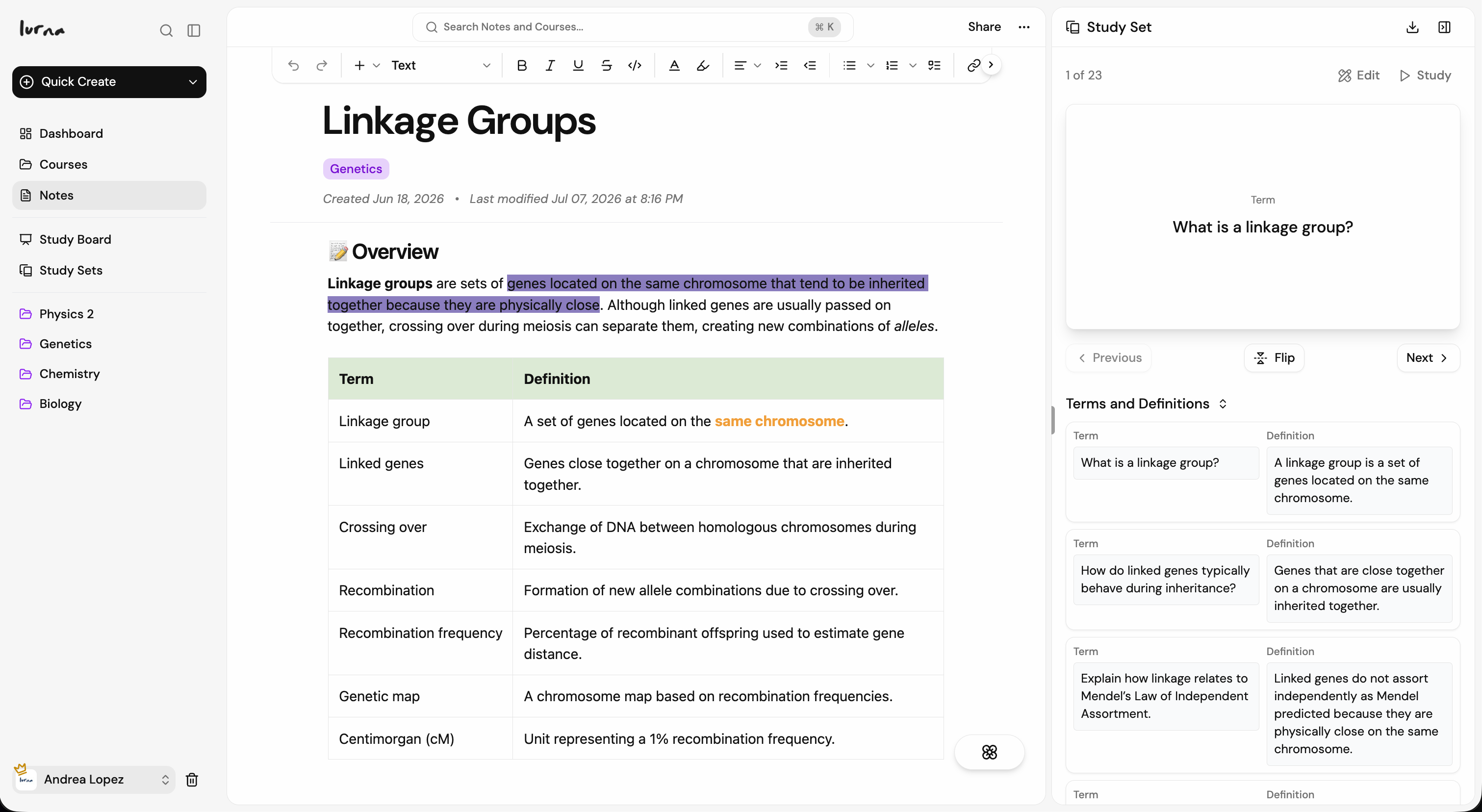
The Complete Writing & Learning Workspace for Students
Role: Creator, Lead Developer & Designer
Timeline: May 2025 – Present (v1.1 Live)
Tools: Next.js, React, TypeScript, TailwindCSS, Convex, Python, LangChain,
OpenAI & Google Gemini APIs, Model Context Protocol (MCP), Chrome & Safari Extensions
Try it out! Official Website Help & Docs
Overview
Lurna is a student-centric, AI-powered writing and learning workspace designed to unite notes, study materials, PDF annotations, and AI intelligence into one seamless environment. At its core, Lurna helps students capture ideas, structure knowledge, and automatically generate study aids (flashcards, quizzes, summaries) directly from their course notes and lecture materials.
Goal
I built Lurna to scratch my own itch as a student. I wanted a single workspace where my notes, lecture PDFs, flashcards, and AI assistant live together—so I could spend less time managing apps and more time actually learning.
The Inspiration
I was tired of skipping between five different apps every time I studied for an exam.
My notes were scattered across Google Docs and Notion, flashcards lived in Quizlet or Anki, lecture slides were buried in browser PDF tabs, and ChatGPT had no idea what was actually written in my course syllabus. Creating flashcards manually took hours—time that should have been spent practicing active recall.
That frustration sparked the idea:
What if your note-taking app automatically understood your lecture notes—and built interactive study sets, quizzes, and summaries with a single click?
How I Built It
What started as a personal note-taking tool evolved into a full-scale academic workspace built with modern web technologies:
Frontend: Built with Next.js (App Router), React 19, TypeScript, and Tailwind CSS. Designed with clean typography, soft contrast, and distraction-free writing modes.
Backend & Data Sync: Powered by Convex (serverless database & real-time sync API) and Node.js. Handles real-time multiplayer document updates, course/folder hierarchies, and automatic Google Drive backups.
AI & Document Processing: Built with Python and LangChain, integrated with OpenAI (GPT-4o) and Google Gemini APIs. Processes PDFs, rich text, and YouTube lecture transcripts into structured study sets.
Building Lurna taught me how to balance complex real-time document state synchronization with sub-second AI orchestration—all while keeping the student interface clean and intuitive.
Block-Based Writing Workspace
Lurna's editor is designed specifically for academic writing. It supports block-based text editing, bullet lists, math equations (LaTeX), code snippets, inline images, and nested course & folder organization.
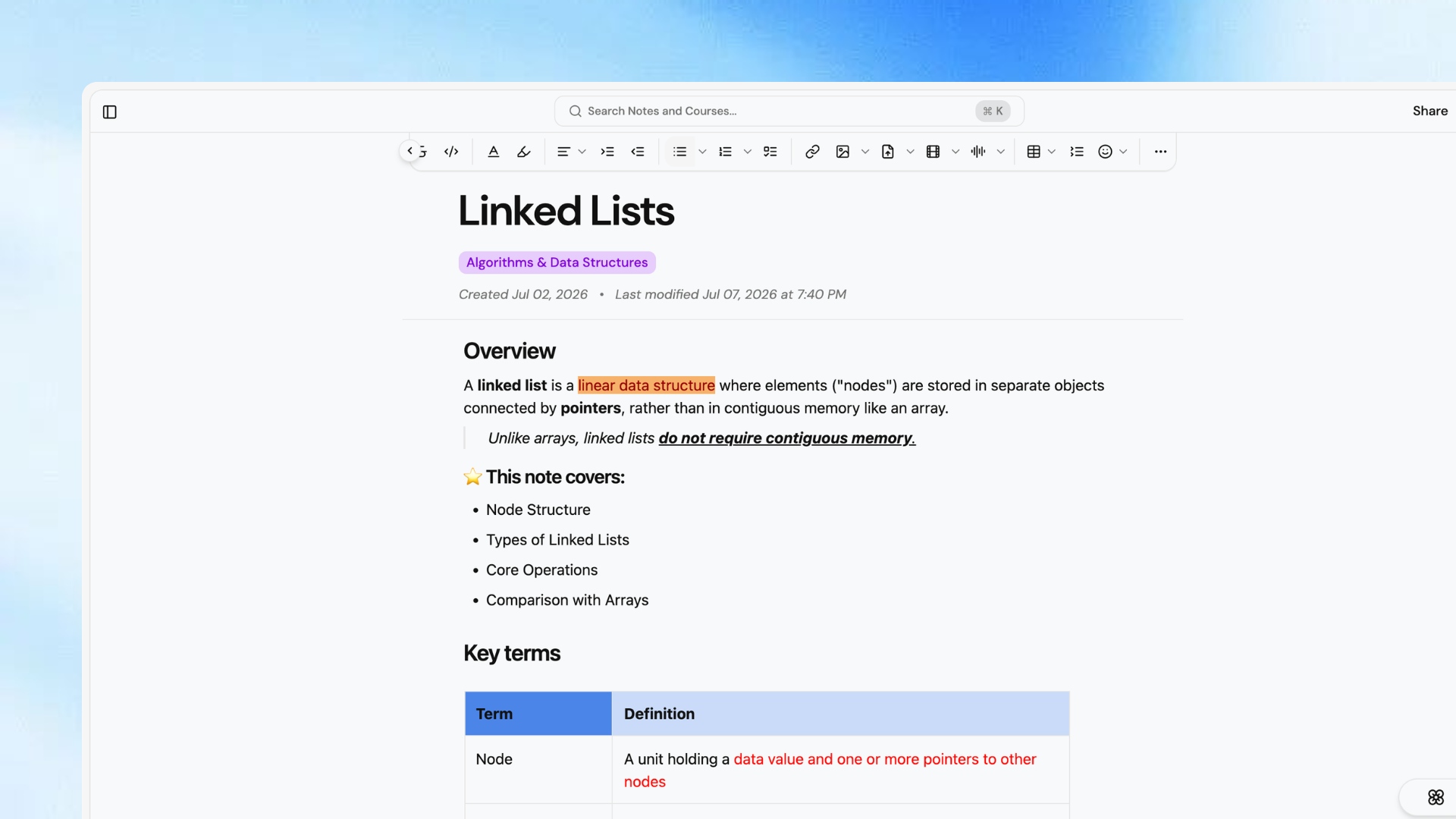
PDF Upload & Interactive Annotations
Students can upload lecture slides, research papers, and textbook chapters directly alongside their notes. You can highlight text, add inline notes, and generate study materials straight from uploaded PDFs.
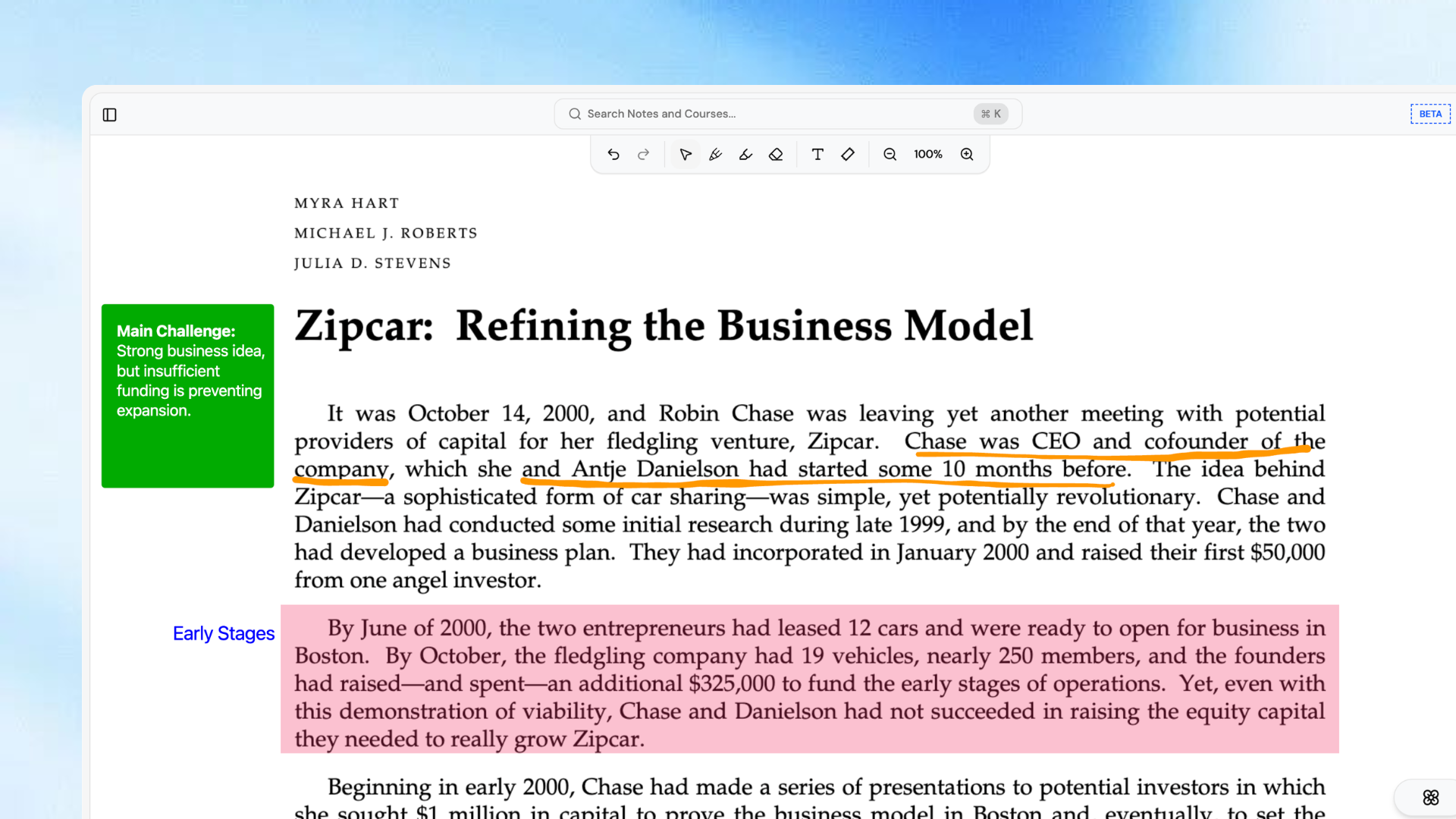
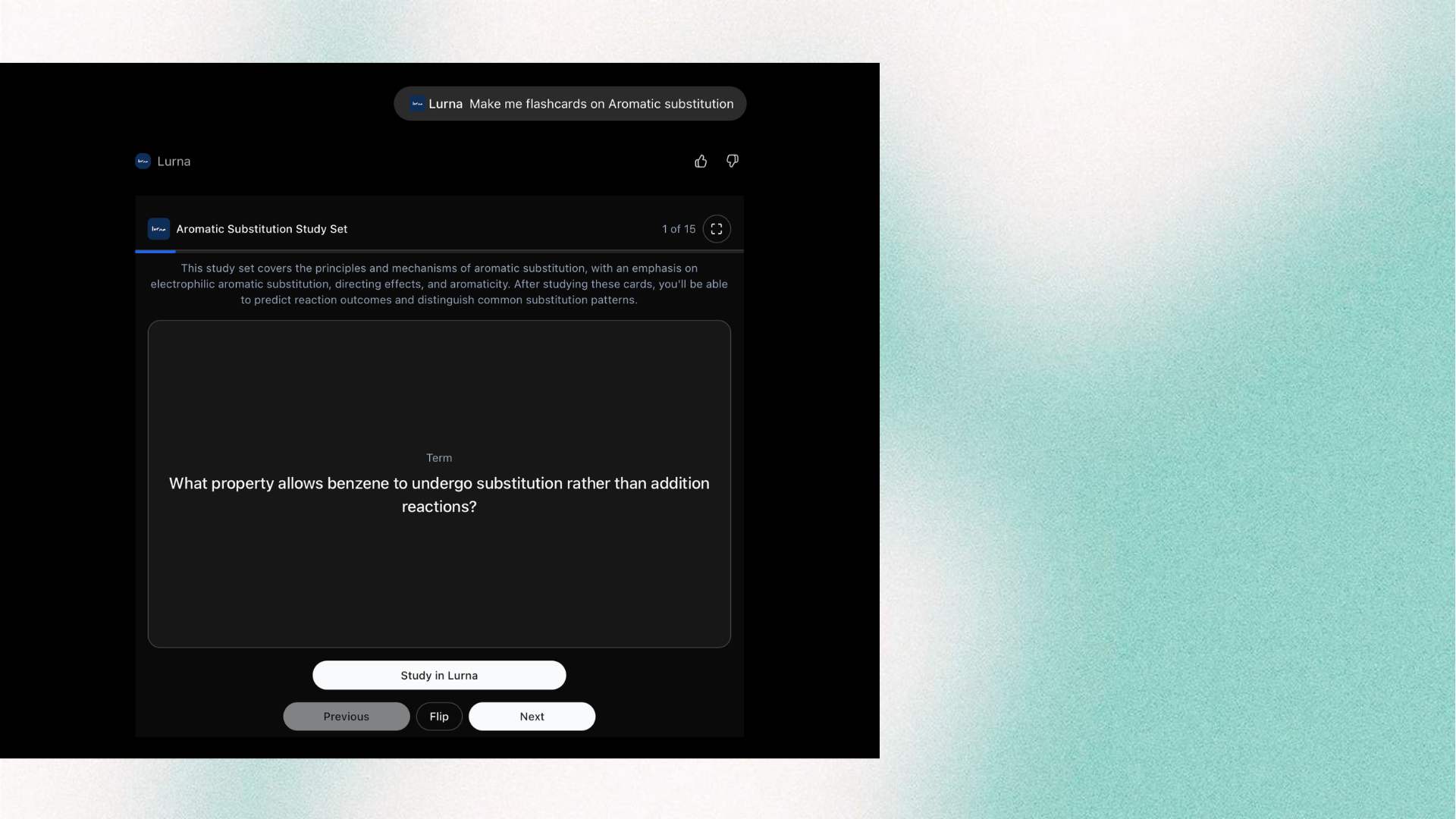
Automated Flashcards, Quizzes & Summaries
Instead of spending hours creating flashcards by hand, Lurna parses your notes to instantly generate interactive flashcard decks, multiple-choice quizzes, and executive summaries. It includes active recall practice modes, test modes, and full Quizlet & Anki deck importing.
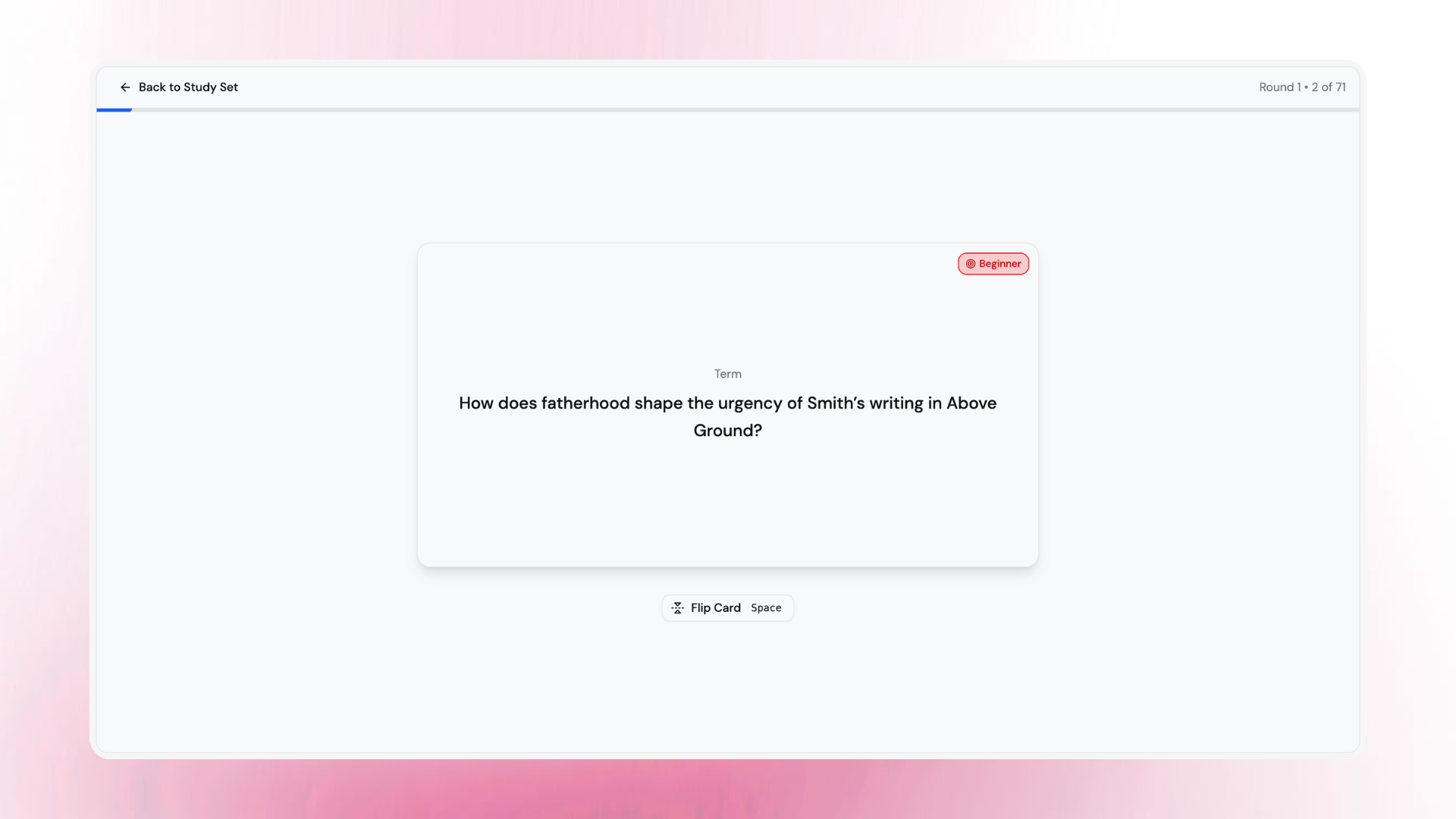
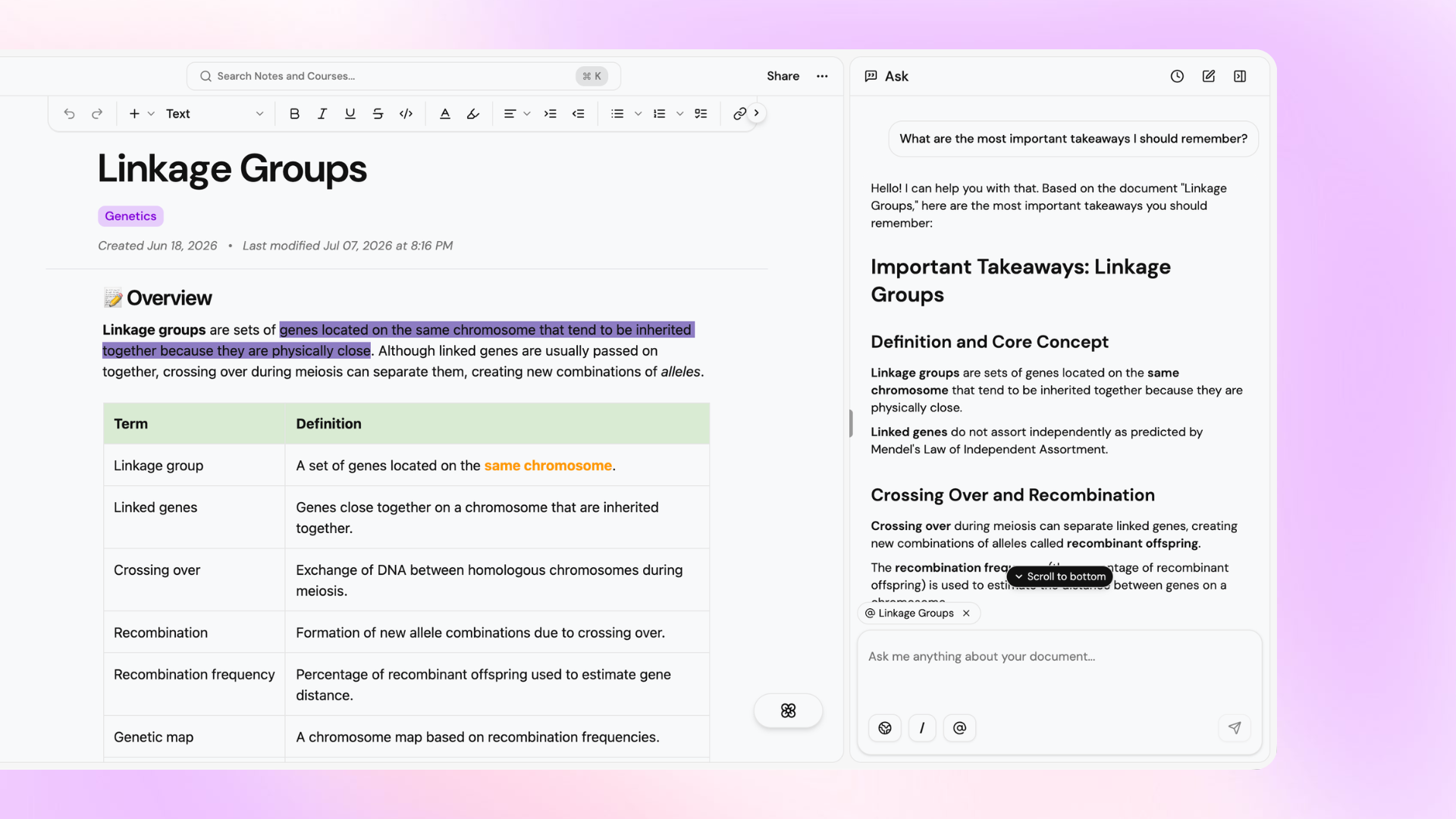
Making AI Understand Student Notes (AI Chat & YouTube Converter)
Generic AI chatbots lack context. Lurna's embedded AI assistant reads your specific note workspace and uploaded documents to answer targeted questions, provide inline writing autocomplete, or convert YouTube lecture video links directly into structured study notes.
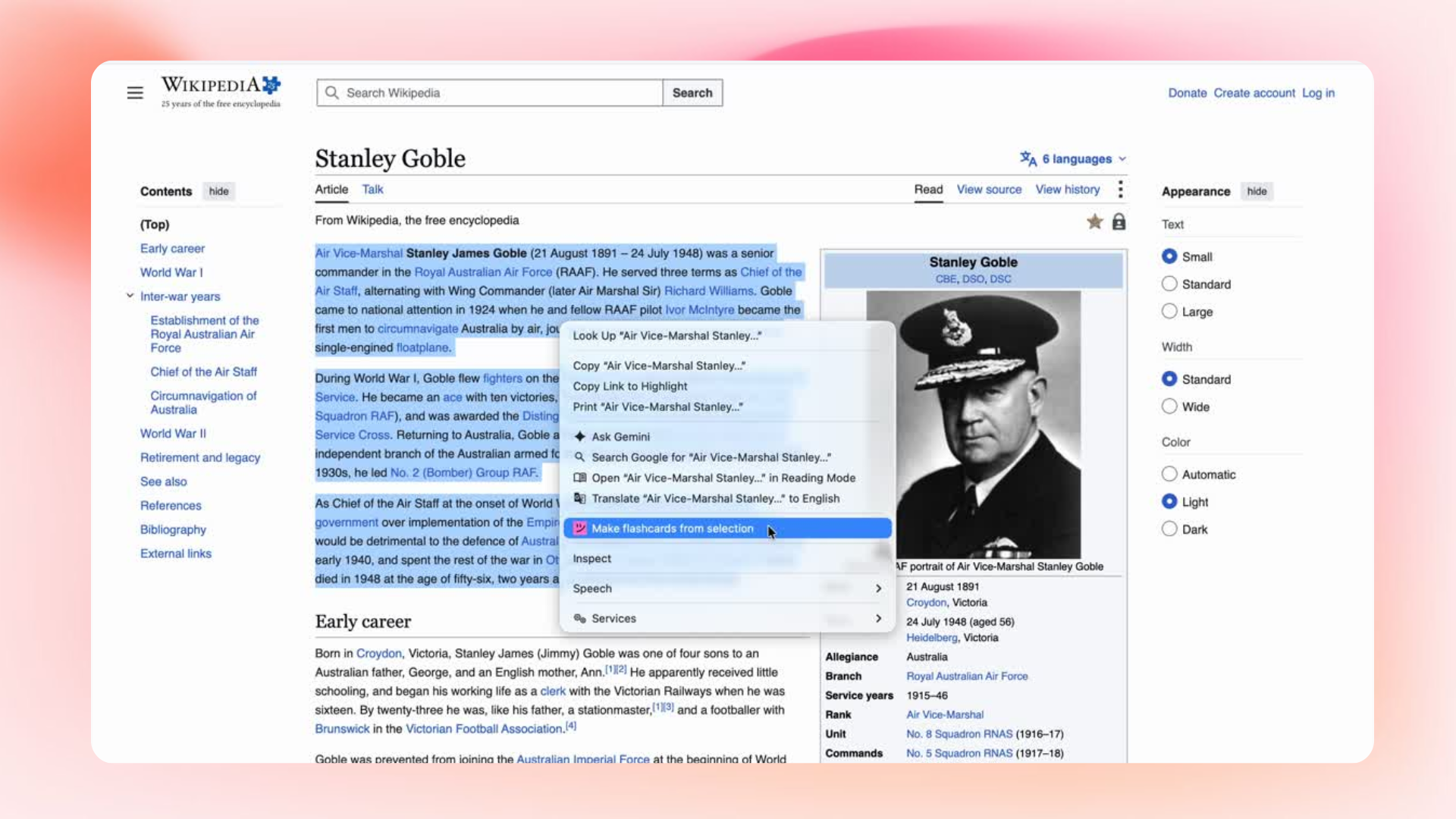
Browser Extensions & Model Context Protocol (MCP)
To make studying seamless anywhere on the web, I built Chrome & Safari extensions to clip webpage content and YouTube transcripts directly into Lurna. Additionally, Lurna integrates with the Model Context Protocol (MCP), allowing users to connect their notes directly into Claude & ChatGPT desktop apps.
System Architecture
Lurna's architecture is built for real-time reactivity, high reliability, and decoupled modularity across client apps, serverless data stores, and AI pipelines.
Business Model & Pricing
Built specifically for student budgets, Lurna offers transparent tiers designed for casual notes up to intensive exam prep:
- Free Tier ($0): Unlimited notes, PDFs, courses & folders, manual Drive backup, unlimited Quizlet/Anki imports, 5 AI study sets/mo.
- Plus Tier ($2/mo or $18/yr): 15 AI study sets, 15 AI quizzes, 15 AI summaries, 30 AI chat questions, 50 AI autocompletes/mo, automatic daily Google Drive backup, 15-min YouTube video limit.
- Scholar Tier ($8/mo or $60/yr): 100 AI study sets, 100 AI quizzes, 100 AI summaries, 300 AI chat questions, unlimited AI autocomplete, 100MB file upload limit, 45-min YouTube video limit.
What Worked & What Didn’t
Building Lurna 1.1 was an intensive learning experience full of engineering breakthroughs and unexpected challenges:
- ✅ Worked: Real-time optimistic UI updates with Convex made note-taking feel instant and lag-free.
- ✅ Worked: Students loved importing Quizlet and Anki decks directly into Lurna.
- ✅ Worked: One-click flashcard generation saved users hours during midterms.
- ❌ Didn’t: Long PDF files initially hit token limits in Gemini/OpenAI, requiring custom chunking logic.
- ❌ Didn’t: YouTube transcript extraction occasionally failed on videos without captions, requiring automated fallback speech-to-text handling.
What’s Next
Lurna is actively expanding—here are features currently in the pipeline:
- Collaborative real-time course study groups
- Google Calendar study schedule sync
- Offline mode support with LocalStorage sync
- Advanced spaced repetition analytics and memory decay tracking
Lessons Learned
- Student tools need zero friction—if setup takes more than 30 seconds, users bounce.
- AI shouldn't replace writing; it should enhance retention and active recall.
- Building cross-platform extensions and MCP connectors dramatically increases user engagement by meeting users where they already work.
Conclusion
Lurna started as a solution to my own study headaches and grew into a complete academic assistant. It combines clean design, active recall learning principles, and practical AI automation.